


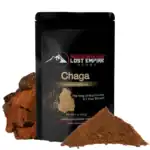


Chaga is the King of Mushrooms
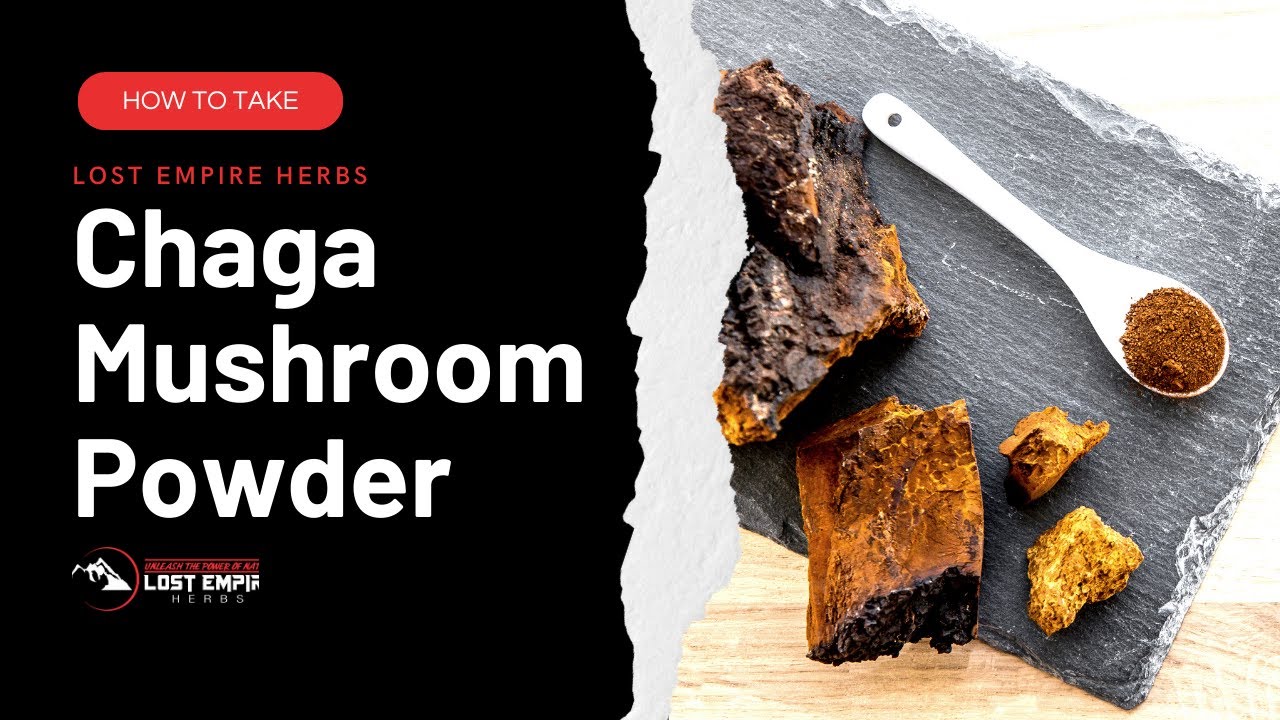
Chaga (Inonotus obliquus) is a fungus most commonly found on birch trees. It forms a dark, woody growth called a conk on the outside of the trunk. This visible growth is the part traditionally harvested.
Indigenous peoples in regions where Chaga grows have traditionally taken it internally and applied it externally in poultices. Its use has continued into modern times across Eastern Europe, Russia, Canada, and the northern United States.

What Researchers Study About Chaga
The studies below used cells, animals, or laboratory models. They explore how Chaga extracts and isolated compounds behave under specific test conditions.


Antioxidant Activity
How compounds from a hot-water Chaga extract reacted with free radicals in laboratory tests.

Inflammatory Signaling
What researchers measured in a mouse study of inotodiol, a naturally occurring compound in Chaga.

Carbohydrate-Digesting Enzymes
How isolated Chaga compounds affected two enzymes in a laboratory test.

Chaga in Simulated Digestion
How Chaga polysaccharides changed under conditions designed to mimic digestion.

Acetylcholine Research
What researchers measured in a mouse study of Chaga extract and brain signaling.
A Closer Look at Chaga
What have researchers found about Chaga and the health benefits people are curious about? The sections below take a closer look at studies on immune signaling, antioxidant activity, digestion, and more. Each explains what researchers measured and what they found in cell studies, animal studies, or simulated digestion.
Immune Signaling
A healthy immune system needs to respond when it detects a problem and dial back that response when it’s no longer needed. Scientists studying Chaga wanted to see how it might affect the signals that help control that response.
In a lab study using mouse immune cells, Chaga extract increased an immune signal in resting cells. In cells that were already responding to a trigger, the extract lowered that same signal. This difference is why researchers are interested in Chaga and immune regulation. They’re studying how it affects the signals immune cells use to turn a response up or down. 1
Antioxidant Activity
Cells naturally produce reactive molecules called free radicals as they turn food into energy. Your body has its own antioxidant defenses to help keep those molecules in check. When too many build up, they can damage parts of cells.
In a lab study, researchers found that compounds from a hot-water Chaga extract could neutralize some types of free radicals. In this study, antioxidant activity refers to how the Chaga compounds reacted with free radicals and made them less reactive in the test. It’s one reason scientists are interested in how Chaga’s naturally occurring compounds behave. 2
Inflammatory Signaling
Think about what happens after a small scrape. The skin around it can turn red or swell as your immune system gets to work. That’s inflammation doing its job. Immune cells coordinate that response by sending chemical messages called cytokines.
In a mouse study, researchers looked at whether inotodiol, a naturally occurring compound in Chaga, changed the levels of those messages in the blood. The cytokine levels they measured were similar in mice given inotodiol and in the comparison group. It’s a closer look at one part of the inflammatory response and how immune cells communicate. 3
Carbohydrate-Digesting Enzymes
During digestion, enzymes break down starches in foods like bread and rice into glucose, which the body absorbs and uses for energy.
In a lab study, researchers found that complex carbohydrates isolated from Chaga slowed the activity of two enzymes involved in breaking down starches and sugars. The effect was stronger after the Chaga compounds went through simulated digestion. The researchers measured enzyme activity in the lab. 4
Chaga in Simulated Digestion
Chaga contains polysaccharides, long chains of sugars that can change as they pass through different digestive environments. Researchers used a laboratory model of digestion to track how Chaga polysaccharides behaved under conditions designed to mimic different stages of digestion. They compared the chemical properties of the samples before and after those stages. 4
That comparison helps explain why researchers study compounds after simulated digestion. The form a compound takes in a powder can differ from the form the digestive tract encounters later on.
Acetylcholine Research
Brain cells rely on chemical messengers to communicate. One of them, acetylcholine, helps brain cells pass along signals involved in learning new information and remembering it later.
In a mouse study, researchers examined a Chaga extract and measured acetylcholine levels and the activity of the enzyme that breaks it down. That enzyme helps determine how long an acetylcholine signal lasts. 5

What’s Naturally Found in Chaga?
The dark, woody growth you see on a birch tree is called a Chaga conk. Inside that rough exterior is a mix of complex carbohydrates, pigments, and other naturally occurring compounds. Researchers have studied these compounds to understand what gives Chaga its distinctive character and how its constituents interact with immune cells and behave in antioxidant tests. 6, 7, 8
Polysaccharides and Beta-Glucans
Polysaccharides are long chains of sugars. Beta-glucans are one group of polysaccharides identified in Chaga. In laboratory studies, researchers have used Chaga extracts to look at how macrophages, immune cells that help detect and respond to changes around them, react to those extracts. That work is one reason scientists are interested in Chaga’s complex carbohydrates and their potential role in immune signaling. 6, 1
Triterpenoids and Sterols
Researchers analyzing Chaga have identified inotodiol, betulin, betulinic acid, and trametenolic acid, along with sterols such as lanosterol and ergosterol. Inotodiol is one of the better-studied compounds in this group. Animal studies have examined how isolated inotodiol affects cytokines, the chemical messages immune cells use to coordinate responses such as inflammation. 7, 9, 3
Melanin, the Pigment Behind Chaga’s Dark Exterior
Melanin helps give the Chaga conk its almost-black outer layer. Researchers have also isolated Chaga melanin and measured its antioxidant activity in the lab. Those tests show how the pigment interacts with reactive molecules under controlled conditions. How it behaves after people consume Chaga is still an open question. 8, 10
Phenolic Compounds
Researchers have also identified smaller compounds in Chaga, including vanillic acid and protocatechuic acid. These belong to a group called phenolic compounds. Researchers studying a hot-water preparation of Chaga found that several isolated phenolic compounds could neutralize free radicals in laboratory tests. 9, 2
Our Chaga Process

Wildcrafted from birch
We start with Chaga harvested from birch trees. We use wildcrafted Chaga conks.
Water and alcohol extraction
Our Chaga is chopped into small pieces, then extracted first with alcohol and again through several rounds of hot-water extraction. The two liquids are filtered, combined, concentrated, and dried into a fine powder. This is what makes it a dual extract.
What 8:1 means
The 8:1 ratio means about eight pounds of starting Chaga go into making one pound of finished extract powder.
Our extract goes through the following steps specifically:
- The whole Chaga conks are chopped down into smaller pieces.
- These pieces are placed into a stainless steel pressurized vessel where they are cooked in ethanol at 75°C or 167°F for three hours. The alcohol is then recaptured.
- After the ethanol process, they are cooked at 80°C or 176°F hot water for two to three hours. This liquid is filtered and collected. Then this decoction process is repeated three times.
- All liquids are combined, then centrifuged to remove any residues.
- The filtered liquid is placed in a vacuum at 55°C or 131°F for around two hours to concentrate it in a ratio of 8 to 1.
- This concentrated liquid is spray-dried at 180°C or 356°F to become a powder.
- This Chaga mushroom powder is then tested in quality control to verify it meets the specifications.
From Birch Tree to 8:1 Extract

How to Use Chaga Powder
Recommended Daily Serving
¼–½ teaspoon
About 0.5–1.1 g per day · 30 g per pouch
More Ways People Enjoy Taking Chaga
Stir Into Coffee
Stir your serving into brewed coffee. Try it with a pinch of cinnamon or a splash of vanilla.
Sip as Chaga Tea
Stir your serving into hot water. Taste it plain first, then add honey or milk if you like.
Blend Into a Smoothie
Blend your serving with banana, cacao, and your choice of milk.
Before You Take Chaga
Chaga contains oxalates. Published case reports have linked high or prolonged intake of Chaga powder to serious kidney injury. If you have kidney disease or a history of kidney stones, talk with your healthcare provider before use. 11 12
Check with your healthcare provider before using Chaga if you take a blood thinner (anticoagulant), an antiplatelet medication, or a medication that lowers blood sugar. Lab and animal studies suggest possible interactions, but it’s unclear whether these interactions occur in people. 11


*These statements have not been evaluated by the Food and Drug Administration. This product is not intended to diagnose, treat, cure, or prevent any disease.


